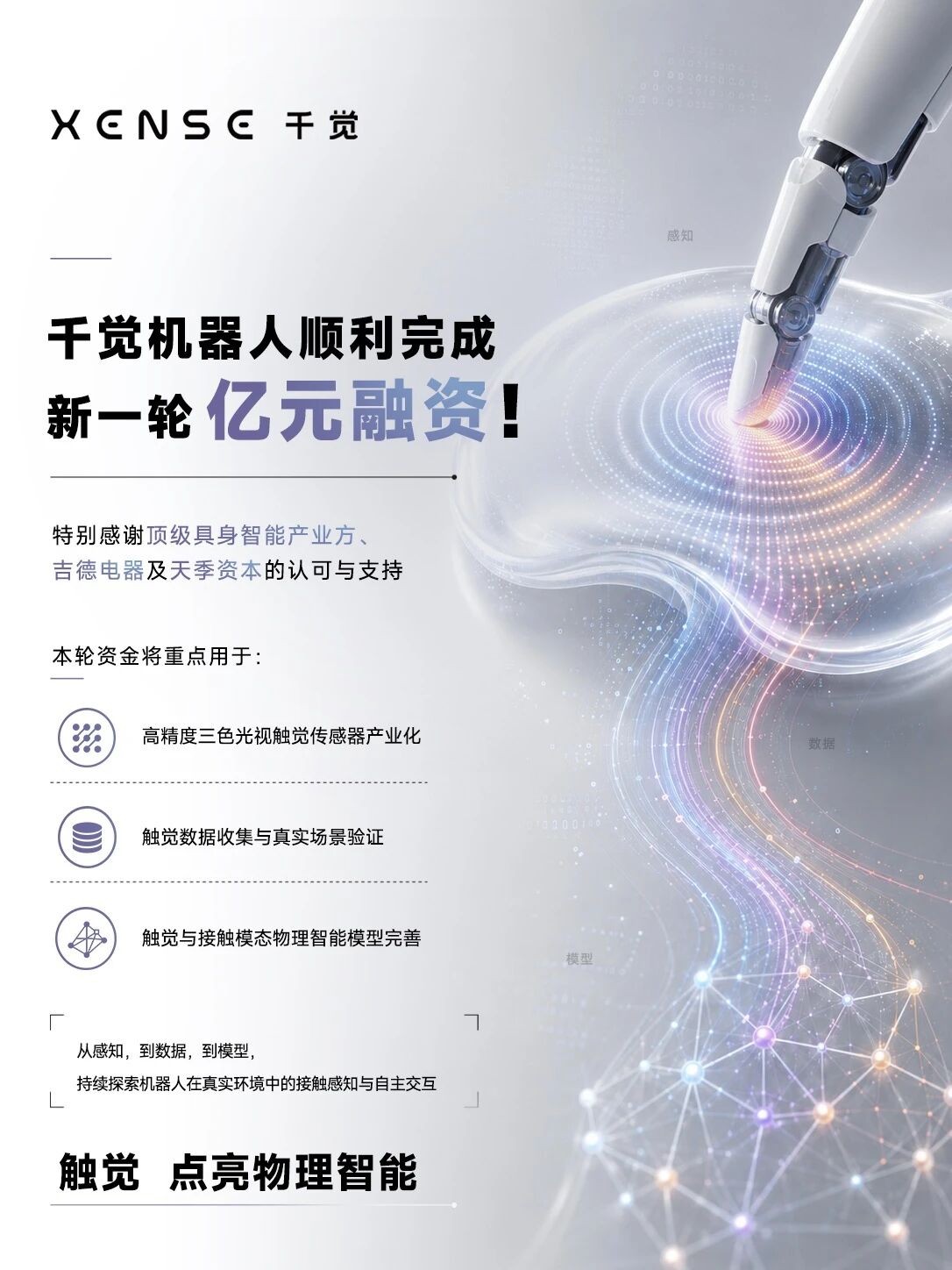
Summary
On July 17, the World Artificial Intelligence Conference (WAIC 2026) officially opened at the Shanghai World Expo Exhi…
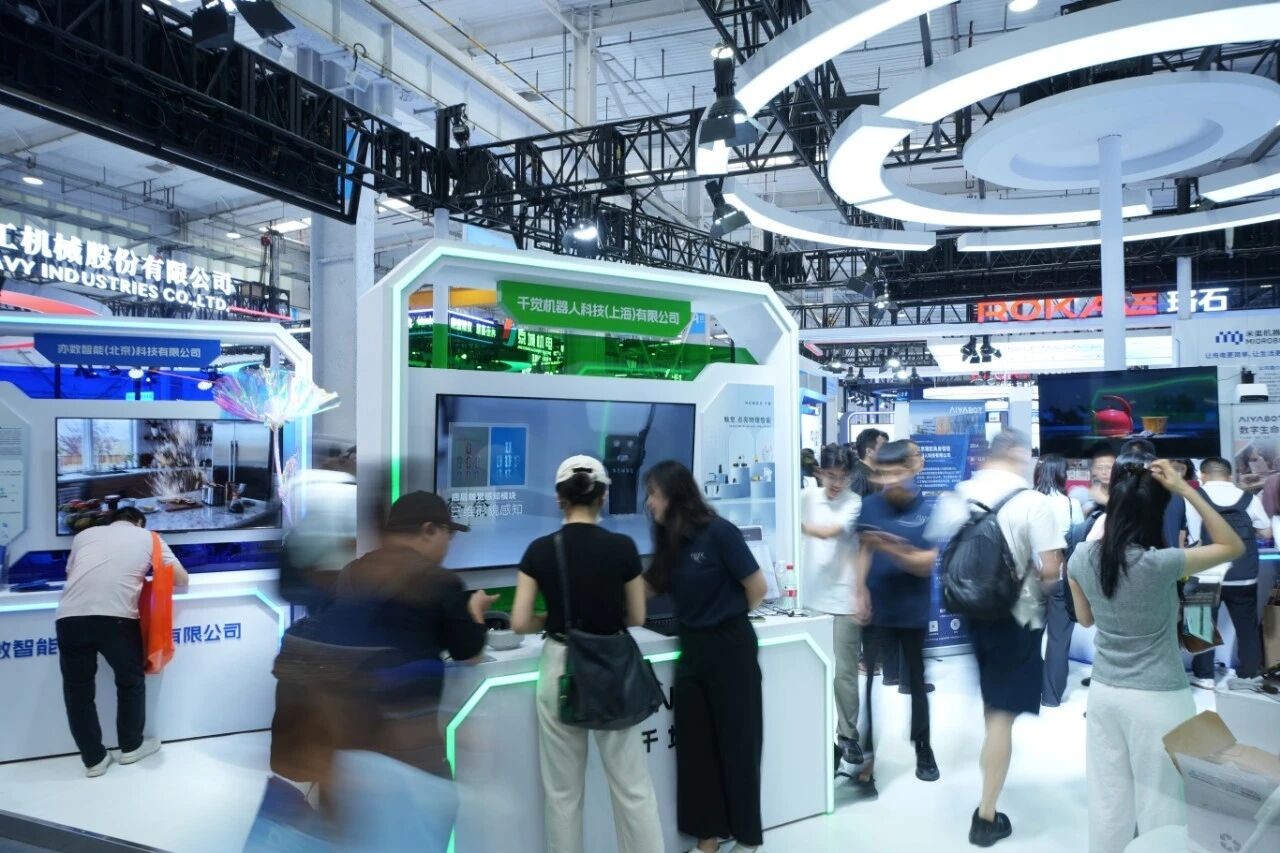
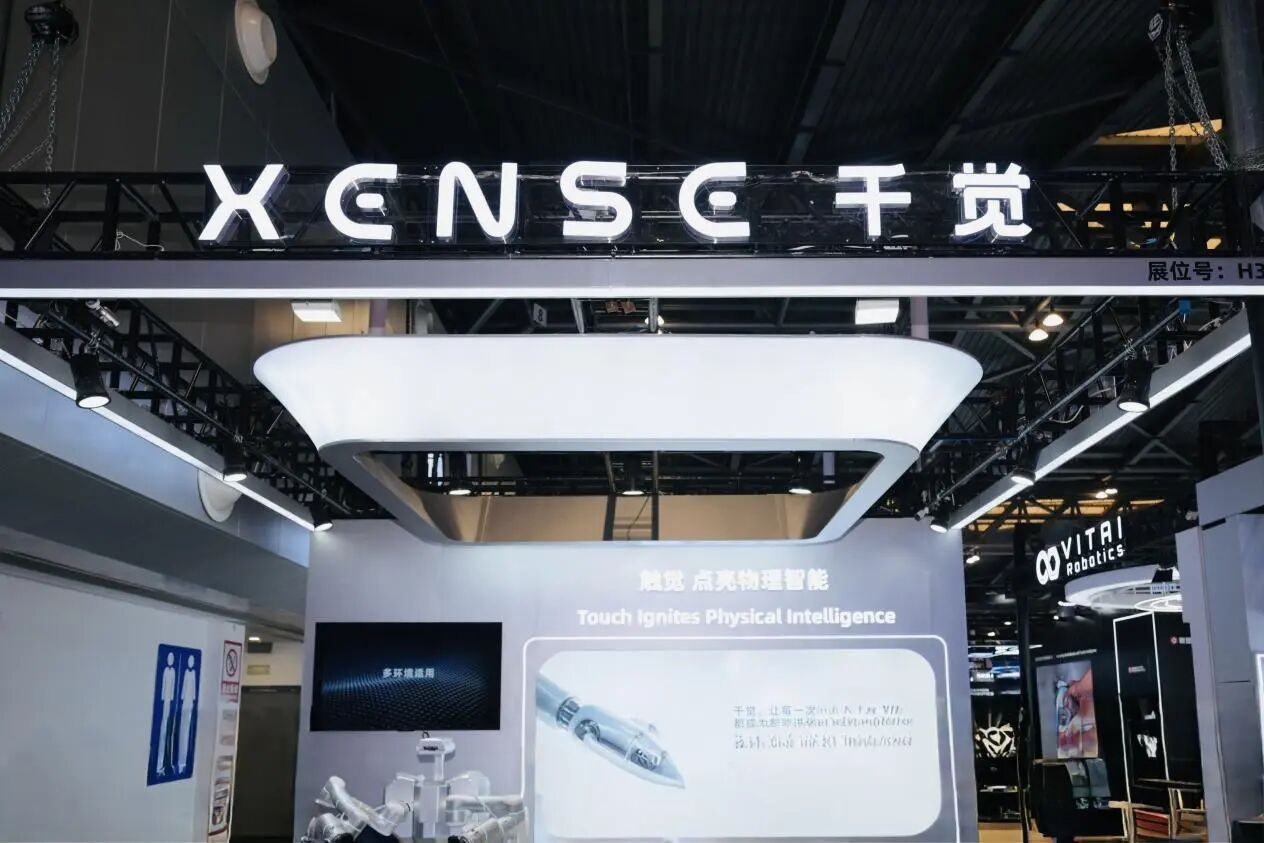
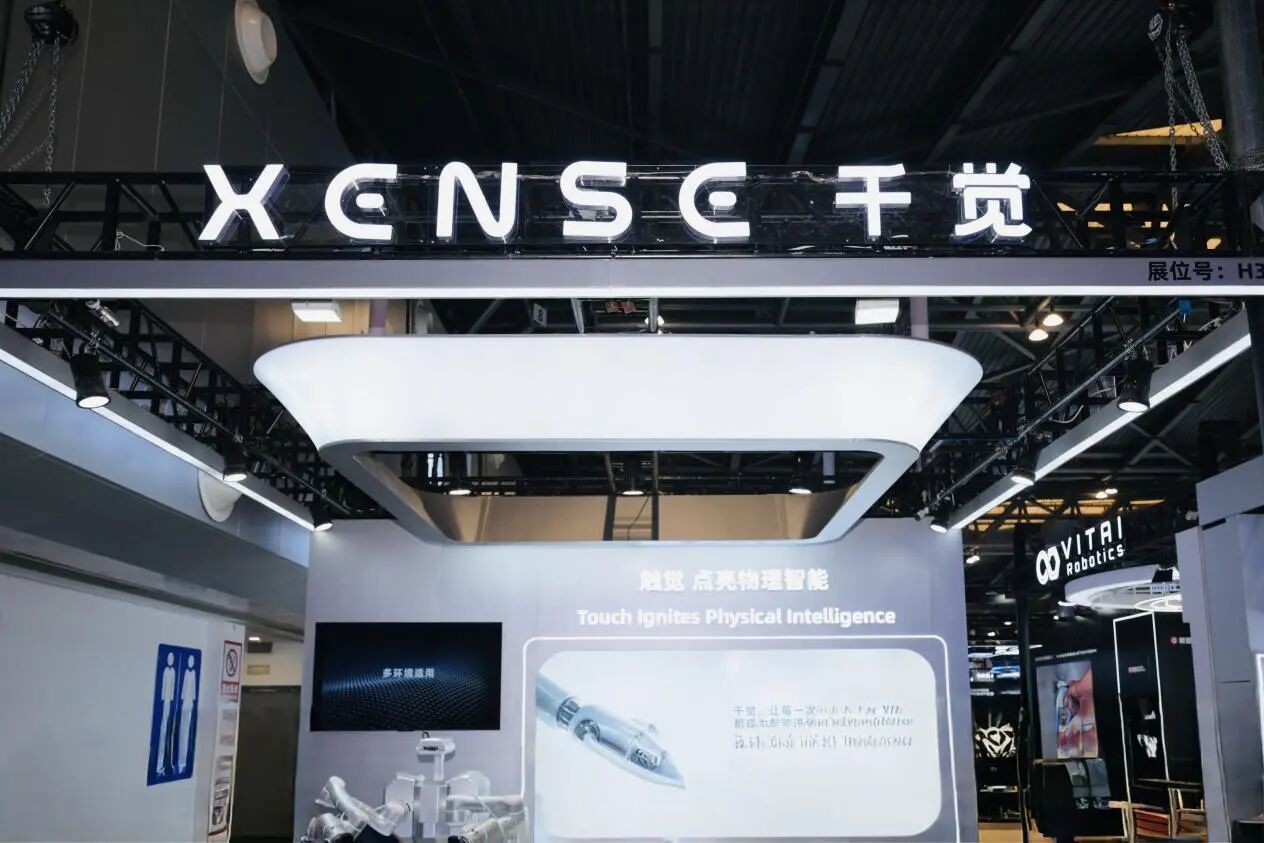
On July 17, the World Artificial Intelligence Conference (WAIC 2026) officially opened at the Shanghai World Expo Exhibition and Convention Center. Xense Robotics, deeply rooted in the tactile physical intelligence track, made a major appearance at this WAIC, with sustained high foot traffic and continuous consultation exchanges at the booth. At this exhibition, with "Touch Ignites Physical Intelligence" as its core, Xense centrally showcased the newly released VTLA embodied tactile model, visuo-tactile multimodal dataset, core data collection devices and tactile sensor hardware matrix, and brought multi-scenario real-world Demos and immersive tactile interaction experiences, comprehensively presenting Xense's "model-data-hardware" tactile-native intelligent technology ecosystem and industrial implementation strength, providing brand-new solutions for the large-scale implementation of embodied intelligence.
01 VTLA Model-Driven
Three Real-Scenario Demos with Solid Implementation
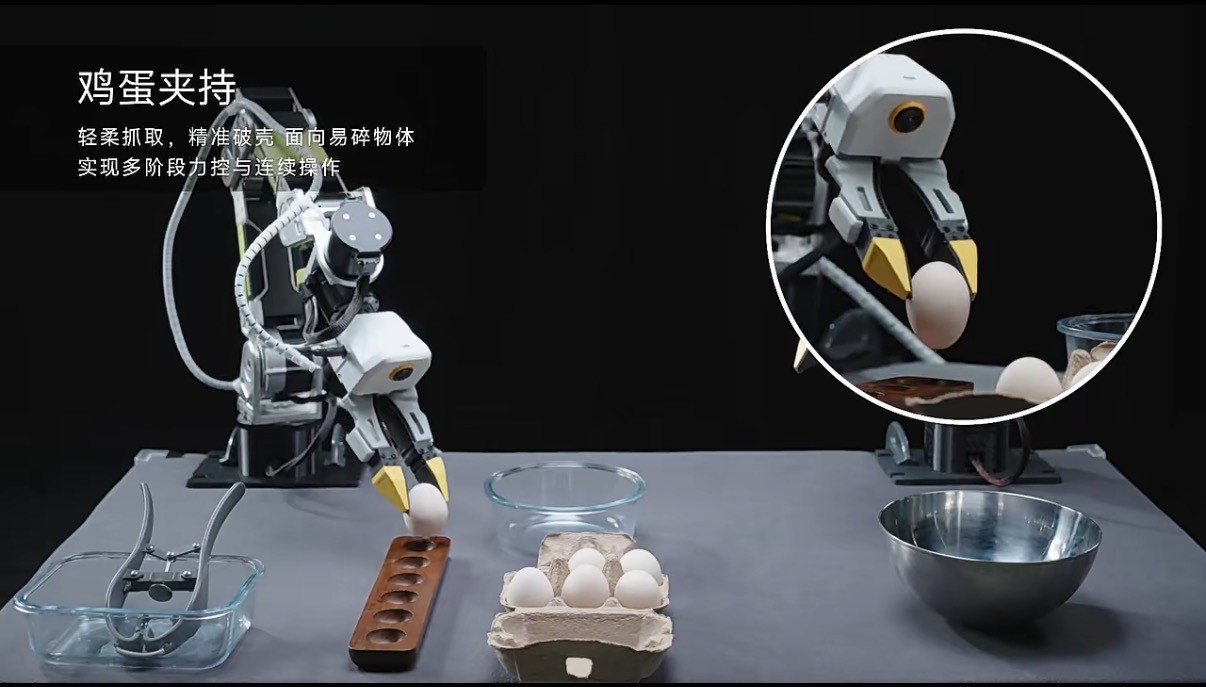
At the Xense Robotics booth, a clear "hardware-data-model" technology ecosystem was vividly presented. The most attention-grabbing exhibits were the three real-scenario Demos driven by the VTLA (Vision-Tactile-Language-Action) multimodal model, jointly validating the core value of Xense's tactile-native technology route in real industrial scenarios.
The dual-arm long-sequence carton forming Demo focuses on flexible materials, long sequences and strong-disturbance operation scenarios. Carton forming involves intricate procedures, requiring continuous multi-step linked actions including grasping, flattening, alignment, folding and pressing, during which material deformation, position offset and uneven force distribution easily occur. In the on-site demonstration, the robot did not merely complete standard actions in an ideal environment — under human interference such as visitors shifting the cardboard, it perceived the cardboard's force state and deformation in real time, dynamically adjusted the direction and magnitude of applied force, and smoothly completed the folding and forming of the carton. The entire process required no preset trajectories and was completed entirely through adaptive tactile feedback.
The earphone precision assembly Demo targets millimeter-level fine operation scenarios in high-end manufacturing. Addressing the pain points of small irregular parts being prone to offset, jamming and extremely low fault tolerance, the robot can perceive edge collisions, pose deviations and micro slips in real time, autonomously completing precise alignment, stable placement and dynamic correction, fully validating the core value of tactile intelligence in high-end manufacturing scenarios such as 3C precision assembly, small-part sorting and flexible packaging — truly delivering the "last centimeter."
The Dewu product authenticity identification Demo targets fully unmanned warehouse inspection scenarios. Facing items that look similar but differ in material, Xense Robotics collects multidimensional tactile features including texture, hardness and elasticity through the VTLA algorithm model and tactile sensors, and combined with the model's multimodal fusion capability, achieves non-destructive removal and replacement of insoles, followed by authenticity verification by Dewu's cloud platform. This capability has extremely high practical value in scenarios such as consumer product authenticity identification and industrial quality inspection.
The common feature of the three Demos: they are not "performance-style" demonstrations with preset trajectories, but adaptive operations truly driven by tactile-native technology. This is precisely where the core competitiveness of Xense's solutions lies.
02 XTac UMI G1 and Sensor Matrix
Consolidating the Data and Perception Foundation
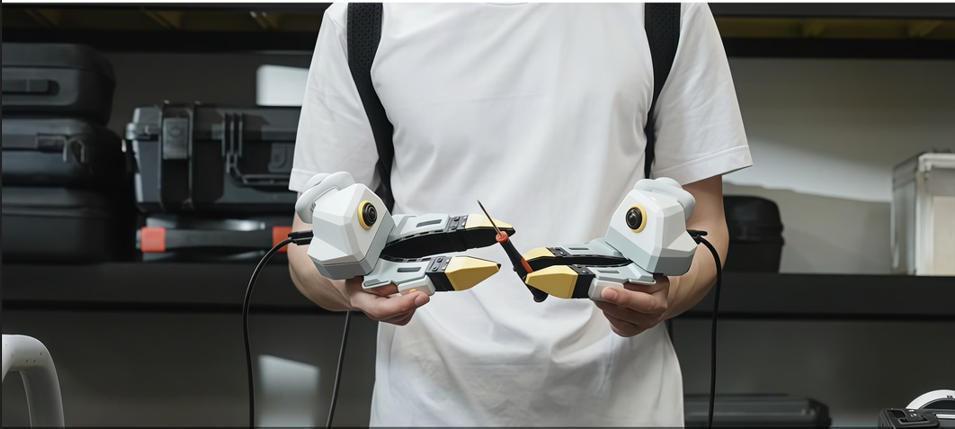
XTac UMI G1: filling the tactile data gap. The XTac UMI G1 wearable visuo-tactile multimodal data collection gripper exhibited on site directly addresses the common challenges of scarce real interaction data, missing tactile modality and high collection cost in the embodied intelligence field. The device integrates high-precision visuo-tactile sensors, an IMU inertial measurement unit and high-resolution encoders, capable of synchronously collecting five-dimensional core data including vision, touch, pose trajectory and gripper state, transforming contact changes, force feedback and slip trends during real human operation into high-quality embodied datasets that can be annotated, replayed and trained. As the core carrier of Xense's technology closed loop, the XTac UMI G1 effectively fills the tactile data gap in embodied model training.
Sensor matrix and whole-hand tactile solution. Xense's full series of multimodal tactile sensor product matrix was also showcased, comprehensively covering fingertip, gripper, flat and curved form factors, along with a newly upgraded waterproof tactile hardware product. At the same time, Xense publicly demonstrated its whole-hand tactile solution for the first time, building a full-hand multi-point tactile feedback network based on fingertip tactile sensors and electronic skin modules, achieving real-time perception of contact position, force magnitude, slip changes and contact state across the entire hand, marking the evolution of robot tactile perception from "local single-point perception" toward "complete intelligent hand understanding."
In the immersive tactile interaction experience zone at the booth, visitors could control the game process in real time through simple actions such as light touch, pressing and force adjustment. The sensor's millisecond-level response speed and fine pressure recognition capability let the public directly experience the ultra-high sensitivity and stability of Xense tactile sensors, truly experiencing the broad application prospects of tactile technology in civil scenarios such as human-robot interaction, virtual reality and remote control.
03 Pioneering the Tactile-Native Route
Leading the Wave of Embodied Intelligence Industrialization
This comprehensive appearance at WAIC 2026 is a concentrated implementation showcase of Xense's "model-data-hardware" technology ecosystem, and also marks the official entry of China's tactile physical intelligence into a new stage of industrialization and large-scale implementation.
From vision-based "seeing the world" to tactile-native "understanding and interacting with the world," Xense, through independent and controllable underlying technology innovation, has completely broken the limitations of traditional robot mechanical execution, achieving a capability leap of autonomous perception, autonomous adaptation and dynamic operation.
In the future, Xense Robotics will continue to deepen the tactile-native track, continuously iterating the X-TouchMind V1 model, TacVerse dataset and tactile hardware system, and continuously breaking through physical intelligence technology bottlenecks. Xense will focus on core scenarios including industrial precision assembly, flexible logistics, intelligent inspection, consumer product authenticity identification and data center construction, continuously deepening industry ecosystem cooperation, and with a complete tactile intelligence foundation, empowering the high-quality development of the embodied intelligence industry and leading the new wave of the physical intelligence era.