Menu

Frequently Asked Question

For Further Support Please Contact:021-62200308

Q: Is Linux supported by the product?

A: Our SDK provides comprehensive cross-platform support for both Windows and Linux environments, including major distributions of Linux (e.g. Ubuntu, CentOS). We also specifically optimized our product for edge computing devices, which makes it fully accommodates Rockchip platforms (e.g. RK3588/RK3576) and NVIDIA Jetson series (Nano/Xavier NX/AGX Orin), ensuring stable operation across heterogeneous hardware architectures.

Q: Is macOS compatibility available?

A: We currently prioritize Windows and Linux platforms in our SDK development. Partial functionality can be achieved through virtualization or containerization solutions, even though macOS isn't our main target platform for now. For specific macOS requirements, please contact our engineering team for customized solutions.

Q: Does the system support multi-sensor integration?

A: Yes. The system enables synchronous multi-sensor coordination. Besides, our proprietary high-performance computing board further facilitates parallel processing of multi-channel sensor inputs, effectively offloading computational burdens from host devices while enhancing system throughput and real-time performance.

Q: What is the maximum transmission range of the sensor?

A: The transmission range depends on the connection method: 1. For USB wired connections, the theoretical maximum range is 5 meters. With premium-grade cables, this may extend to 7 meters, though packet loss or device recognition failures become probable beyond 5 meters. 2. When connected via our dedicated compute unit: Sensors interface directly with the compute box, which then transmits data through LAN networks. Similar to ROS2's discovery mechanism, data remains accessible regardless of distance within the same network environment.

Q: Can the product provide force data, torque data, and deformation field data derived from camera image processing?

A: Yes. Our system utilizes advanced multimodal tactile algorithms to extract comprehensive mechanical information from imaging data, including but not limited to six-dimensional force-moment vectors, three-dimensional force distribution matrices, and surface deformation field datasets, delivering holistic mechanical analysis solutions.

Q: What distinguishes three-dimensional force distribution from normal force components??

A: Three-dimensional force distribution characterizes complete vectorial force profiles across sensor surfaces (X/Y/Z axes), encompassing both normal (orthogonal to contact surfaces) and shear (tangential) force components. Normal force components exclusively represent orthogonal vectors - though still expressed through triaxial (X/Y/Z) coordinates, particularly for non-planar sensors (e.g., fingertip variants). Essentially, 3D force data synthesizes normal and shear vectors for comprehensive force characterization.

Q: Why does the sensor's physical marker grid (11×20) differ from visualization (18×33) and SDK outputs (20×35)?

A: This discrepancy arises because we have adopted an advanced interpolation-correction algorithm. While the physical marker array maintains an 11×20 configuration, our proprietary algorithm generates enhanced-resolution outputs (18×33 for visualization; 20×35 via SDK) to ensure superior data smoothness and precision. We are standardizing all outputs to 18×33 for consistency.

Q: Does the gel component's lack of markers imply marker-dependency for accurate force measurement?

A: Correct. Marker-equipped sections of the sensor enable dual-capability morphology perception and precise force measurement, whereas marker-free gel sections specialize in high-precision contact depth mapping. Only areas equipped with makers facilitate rigorous mechanical quantification; areas without makers provide geometric topography or depth data exclusively.

Q: What post-purchase technical support is available (e.g., drift correction, calibration, parameter consultation)?

A: Our proprietary self-calibrating algorithm ensures long-term measurement consistency with minimal maintenance. Comprehensive support includes: technical parameter consultation, software development guidance, etc. through multiple methods, such as online documentation, video tutorials, community forums, and dedicated technical assistance.

Q: Are 3D assembly files provided?

A: Yes. We provide complete 3D assembly files (STEP/IGES formats) for your convenience in system integration and structural design optimization. These documents will facilitate precise sensor placement and cable routing, enabling the best performance of the product.

Q: Does surface damage require factory servicing?

A: No. The innovative quick-release design enables user-replaceable silicone contact surfaces without factory intervention, minimizing downtime. Replacement kits with detailed guides are available for repurchase.

Q: What is the warranty policy?

A: We provide a 6-month warranty for the entire machine and a 3-month warranty for the sensors. During the warranty period, we offer free repair or replacement services (excluding damage caused by human factors or normal wear and tear; specifics are detailed in the warranty statement). Additionally, we offer extended warranty service options to accommodate your long-term usage needs.

Q: What output formats does the SDK support?
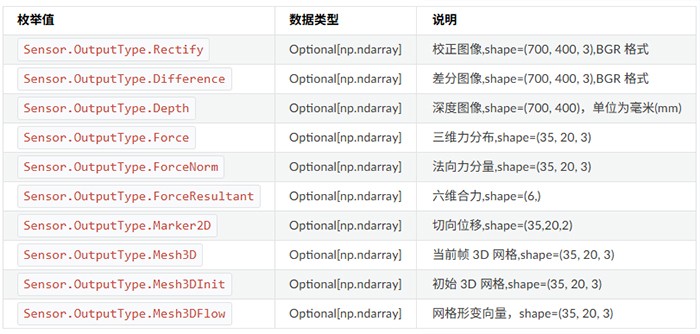
A: Please refer to the following Xense documentation:

Q: What is the data output frequency?

A: In standard mode, the data output frequency is 30Hz, while in high-performance mode it can reach 60Hz. For clients with specialized requirements, we offer custom firmware solutions supporting output frequencies of up to 100Hz or higher (dependent on hardware configuration and environmental conditions).

Q: How long does the product installation and deployment process take?

A: The standard installation requires approximately 5 minutes to complete, including device connection and GUI software setup. For custom development scenarios, SDK environment configuration may take an additional 10 minutes via pip install xensesdk. Comprehensive installation guides are provided to streamline the process, while our technical support team remains available for both remote assistance and on-site support to address complex deployment requirements.
Scan the QR code to Purchase

Scan the QR code to Purchase