Summary
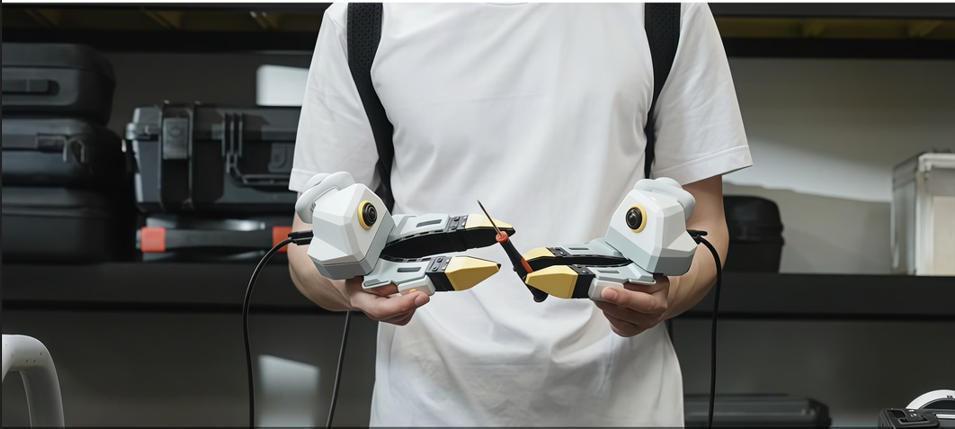
Xense Robotics officially released its first VTLA embodied tactile model, X-TouchMind V1, along with the first visuo-t…
From seeing the world to manipulating the world
Building a full-stack tactile intelligence ecosystem from tactile perception and data collection to embodied intelligence
The Next Challenge for Embodied Intelligence: From Post-Hoc Modality to Tactile-Native
X-TouchMind V1: Xense's First Tactile Embodied Foundation Model
TacVerse 1k: The First 1,000 Hours of High-Quality Visuo-Tactile Multimodal Embodied Dataset
Driving large-scale implementation of physical intelligence for real industrial tasks
Building a full-stack tactile intelligence ecosystem
from tactile perception and data collection
to embodied intelligence
Xense Robotics officially released its first VTLA embodied tactile model, X-TouchMind V1, along with the first visuo-tactile multimodal embodied dataset for real physical interaction, TacVerse 1k.
This release marks the completion of Xense Robotics' complete technology ecosystem from tactile hardware systems and data collection systems to data assets and embodied models, further advancing tactile intelligence from perception capability toward robot intelligence capability.
01 The Next Challenge for Embodied Intelligence:
From Post-Hoc Modality to Tactile-Native
As robots move toward real-world applications, relying solely on vision technology can no longer meet complex task requirements. However, post-hoc tactile information often requires a splicing-style path to integrate into existing embodied models, limiting the ceiling of physical interaction capability.
Facing this industry bottleneck,
Xense believes that touch is the key modality for robots to truly enter the physical world, and must be built full-stack around real high-contact scenarios based on a native ecosystem,
so that robots can not only perceive the world but also understand and reliably complete complex physical tasks.
02 X-TouchMind V1:
Xense's First VTLA Embodied Tactile Model
X-TouchMind V1 is a VTLA embodied tactile model trained by Xense on visuo-tactile multimodal data.
X-TouchMind V1 focuses more on the physical state after contact occurs, jointly modeling vision, language, touch, action and robot body state, achieving coordinated modeling from task understanding and action generation to contact feedback control.
The model adopts a layered architecture corresponding to different levels of real robot manipulation:
System 2: task understanding and semantic reasoning layer, responsible for understanding the environment, task goals and language instructions, answering "what to do."
System 1: action generation and trajectory planning layer, generating action paths based on vision, task semantics and robot state, answering "how to do it."
System 0: tactile-body interaction control layer, using tactile and body feedback for high-frequency correction during real contact, answering "how to do it steadily and accurately after contact."
Through this architecture, X-TouchMind V1 can not only generate action sequences, but also understand slip, force, deformation, texture and contact stability during real manipulation, dynamically correcting actions, thereby improving robot stability in tasks such as fine manipulation, flexible material handling and intelligent inspection.
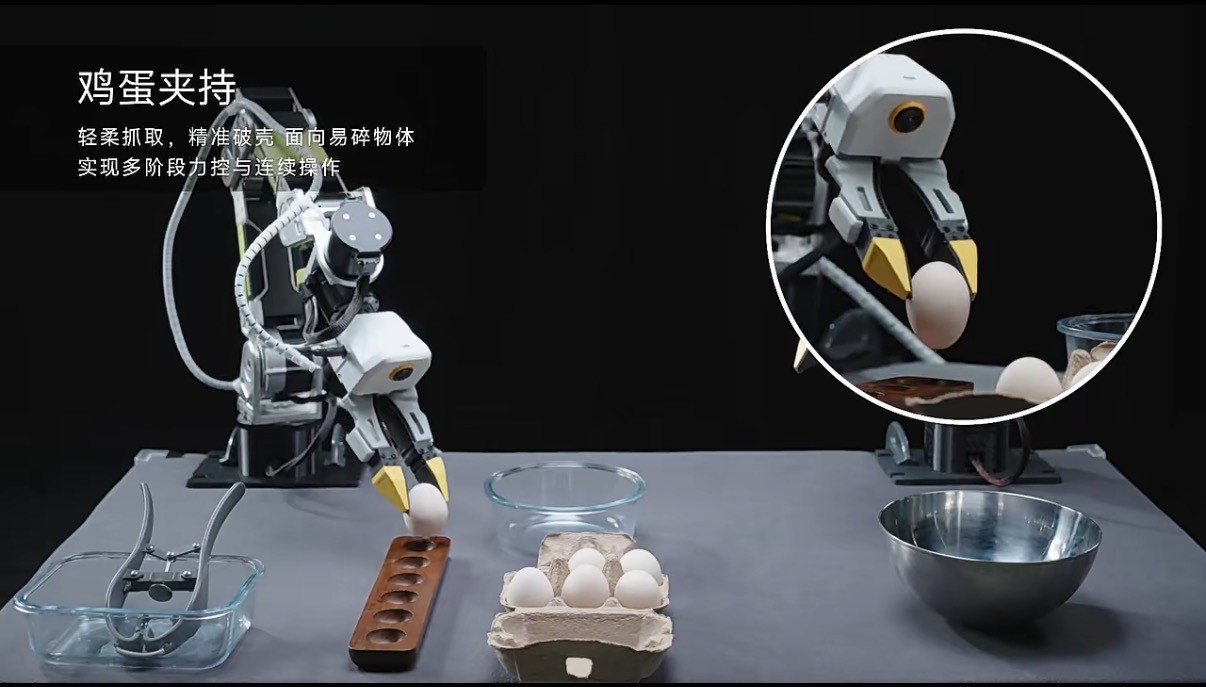
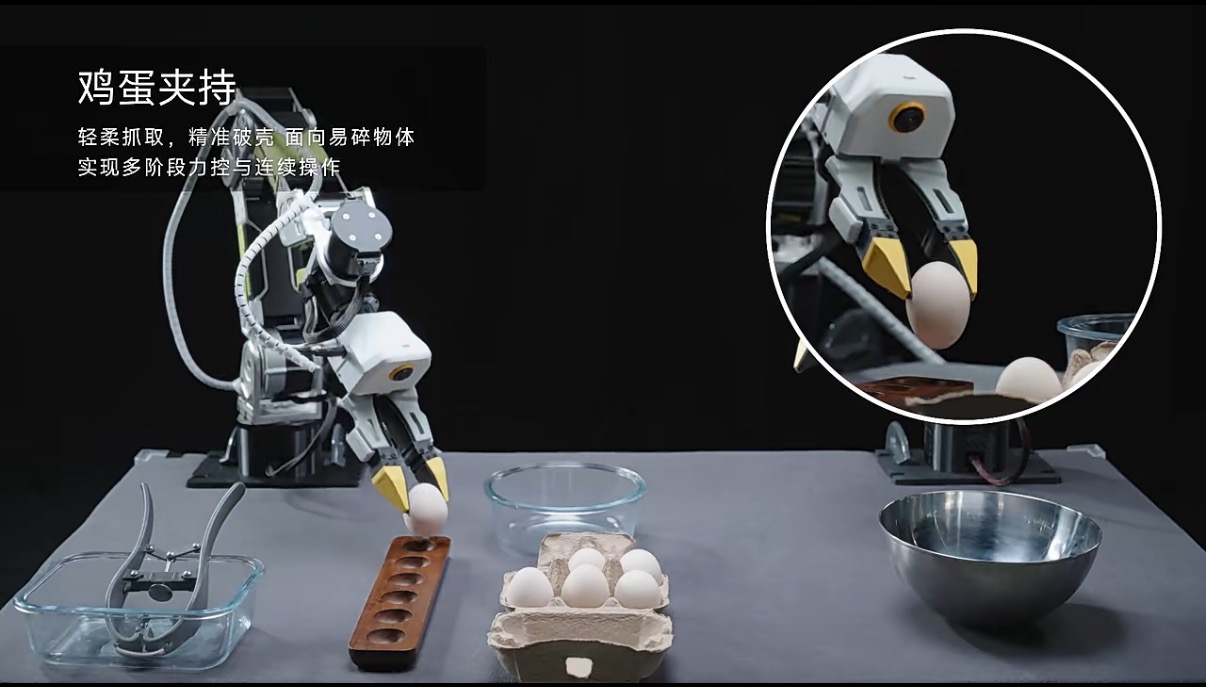
For Contact-Rich tasks such as pushing aside, pulling out, pressing together, inserting, aligning and restoring, X-TouchMind V1's goal is not to have the robot complete a one-off action demonstration, but to enable the robot to "do the job well" reliably, safely and without damage in complex physical interactions.
03 TacVerse 1k:
The First 1,000 Hours of High-Quality Visuo-Tactile Multimodal Embodied Dataset
Released alongside X-TouchMind V1, TacVerse 1k is Xense's first 1,000-hour high-quality visuo-tactile multimodal embodied dataset built for real physical interaction.
On the data collection side, TacVerse 1k relies on Xense's self-developed collection hardware system, decoupling data production from the robot body, achieving production capacity decoupling, scenario decoupling and body reuse. Based on this system, data collection costs can drop by more than 80%, with efficiency improved 3 to 5 times, providing the foundation for large-scale real interaction data accumulation.
On the data quality side, Xense's self-developed XTacFlow is responsible for unified scheduling of the collection pipeline, supporting unified access of multiple devices, millisecond-level cross-modal time alignment, and achieving over 90% automation in data return and post-processing, transforming raw multimodal data into trainable, traceable, reusable data samples and training assets.
TacVerse 1k's data structure is natively compatible with mainstream robot data formats including LeRobot, MCAP, HDF5 and ROS2, and standardizes tactile modality extension fields, so the data is not only usable internally at Xense but also provides a foundation for industry sharing, reuse and benchmarking.
According to the release plan, the first 100 hours of the TacVerse 1k dataset will open for applications on July 30, covering 40+ real scenarios; starting in August, applications for the 1,000-hour dataset will open in batches, with open cooperation advanced through platforms such as Alibaba ModelScope and Hugging Face.
The simultaneous release of X-TouchMind V1 and TacVerse 1k marks Xense's official entry into a new stage of industrial implementation.
Going forward, Xense will focus on in-depth industry cooperation in scenarios including industrial precision assembly, consumer electronics assembly, flexible logistics, intelligent inspection, consumer product authenticity identification and data center construction.
A representative of Xense Robotics said: "We hope the release of X-TouchMind V1 and TacVerse 1k will continue to provide value to the industry, opening a new stage of industrial implementation with 'tactile-native.'"
In the future, Xense will continue to advance technology iteration and theoretical exploration around "tactile-native" and "real scenarios," progressing together with the industry.