

内容摘要
At Xense's exhibition area at the Pujiang Innovation Forum, a visitor uses an XTac UMI G1 wearable data collection gri…
At Xense's exhibition area at the Pujiang Innovation Forum, a visitor uses an XTac UMI G1 wearable data collection gripper to pick up a thin business card. On the screen beside them, pose data, multimodal tactile data, camera images, IMU data, and the gripper's opening angle appear in sync. An ordinary pick-and-place movement becomes multimodal data that can be recorded and analyzed. The live demonstration shows how tactile data arises from contact and enters the robotic manipulation process.
At the event, Xense presented the XTac UMI G1 wearable data collection gripper, multimodal tactile sensors, and its whole-hand tactile solution, focusing on tactile sensing and data collection during real physical interactions.
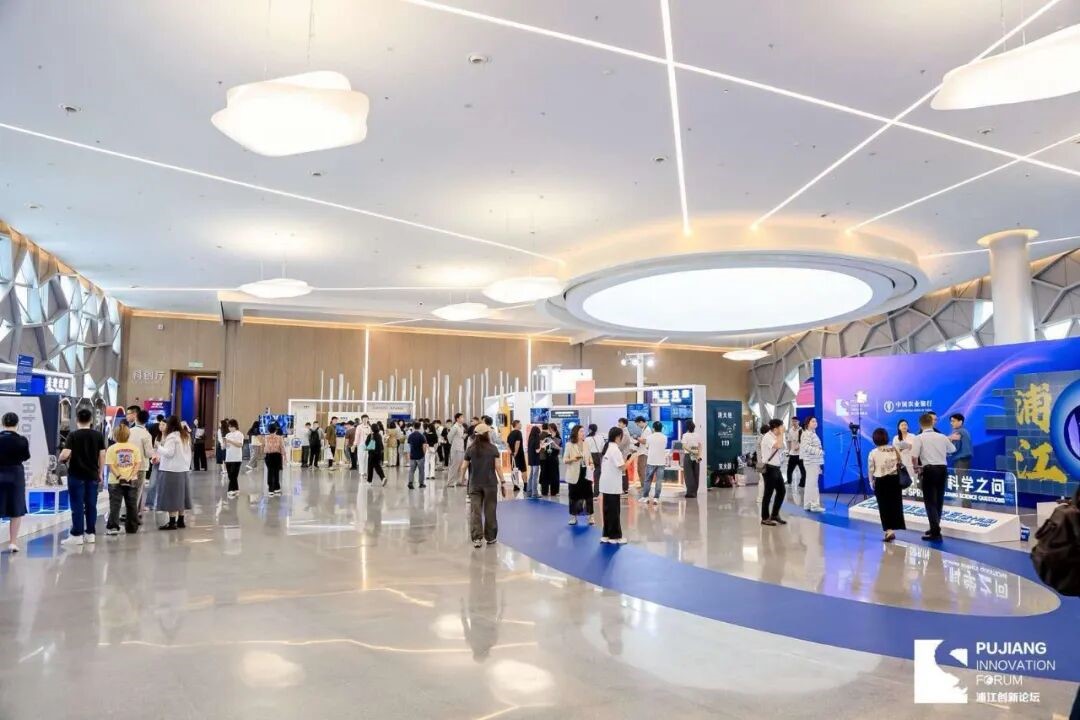
The Pujiang Innovation Forum has long focused on the frontiers of science and technology, the development of future industries, and the commercialization of innovation. Under this year's theme, “Sharing Innovation, Shaping the Future: The Mission of the Global Science and Technology Community amid a New Technological Revolution,” the forum brings together researchers, industry participants, and innovators to discuss frontier technologies and future applications.
In real-world manipulation, contact occurs across different areas of a dexterous hand.
When a hand supports an object, contact is concentrated at the fingertips and finger pads. Grasping requires broader contact across the palm and several fingers. As the hand twists, adjusts, or repositions an object, the points of contact, direction of force, and slip state change continuously.
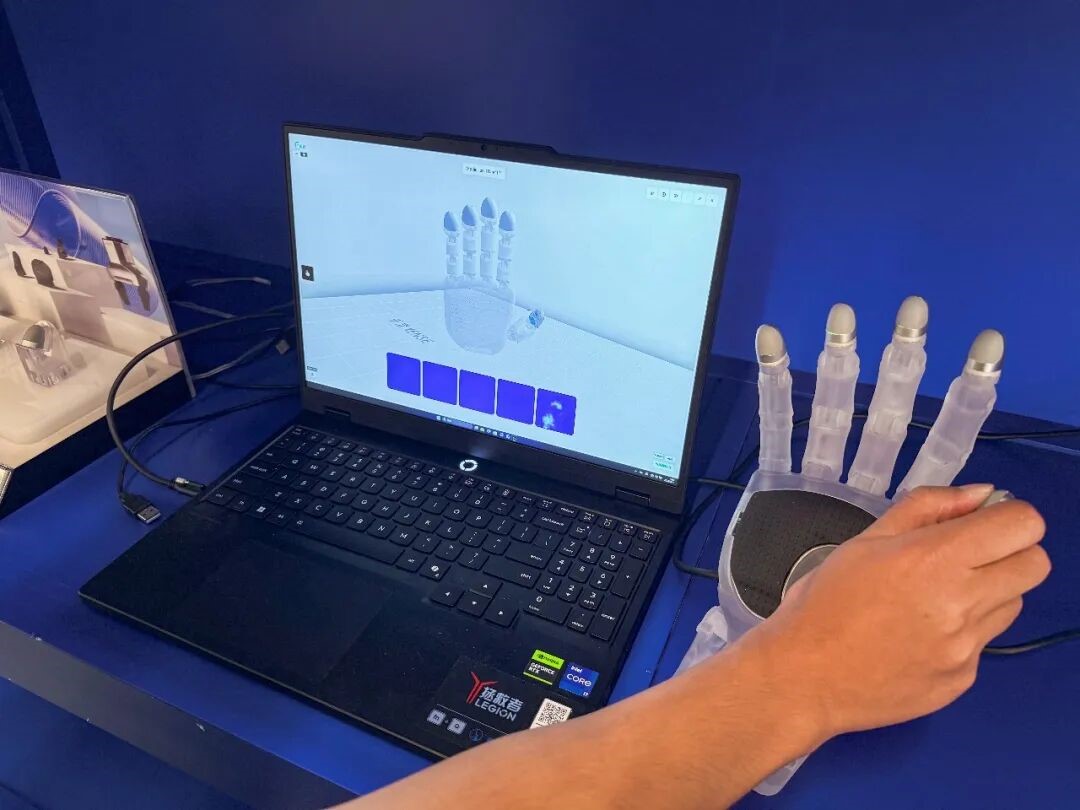
Xense Whole-Hand Tactile Solution 2.0 combines visual-tactile sensors at the fingertips, multi-zone flexible electronic skin, and an edge tactile computing HUB in one system. The fingertip sensors detect fine contact and subtle deformation. Flexible electronic skin covers areas such as the palm and finger pads. The tactile HUB connects multiple tactile inputs and processes the data at the edge, reducing host-side perception computing load.
Each area performs a different sensing task. Tactile sensing thus extends beyond local fingertip feedback to capture a more complete picture of contact between a dexterous hand and an object.
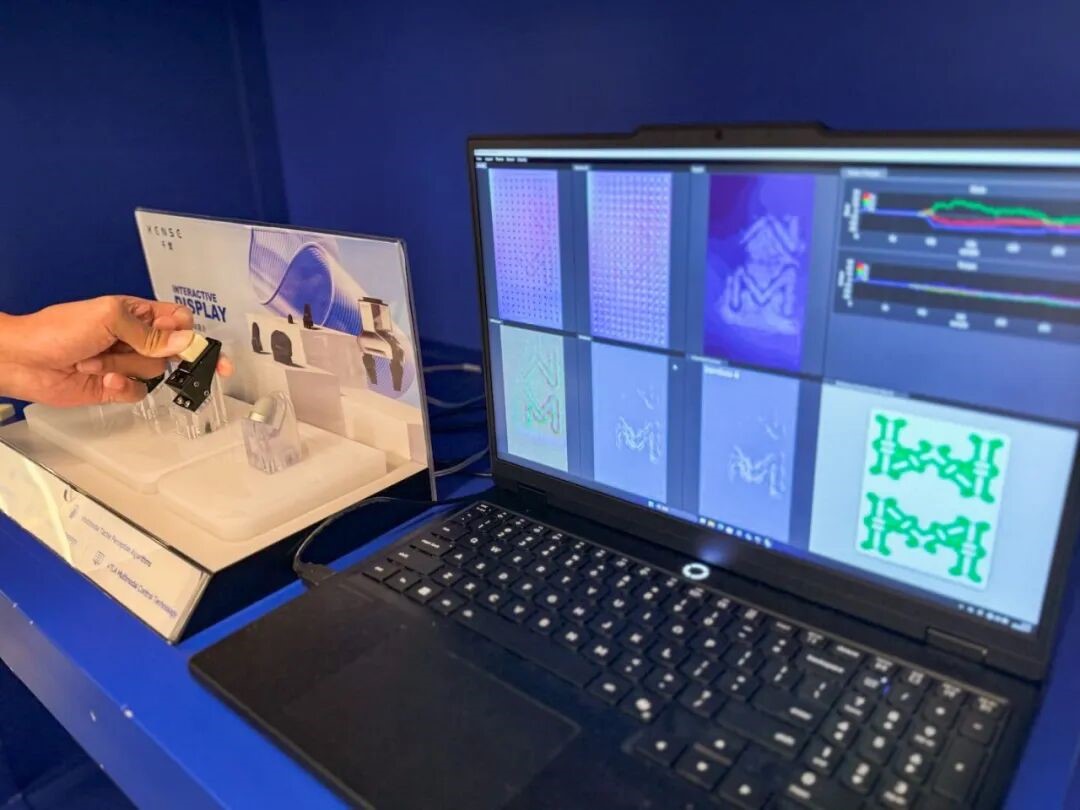
In the multimodal tactile sensor display area, visitors can press, slide, and touch different textures to see tactile data change in real time. When a mahjong tile presses against a flat sensor, the contours of its characters, raised texture, and local surface topography become observable digital information.
Here, tactile sensing does more than indicate whether contact has occurred. It also helps the robot understand an object's surface and the state of contact.
If sensors make contact perceptible, the XTac UMI G1 wearable data collection gripper makes real-world manipulation recordable.
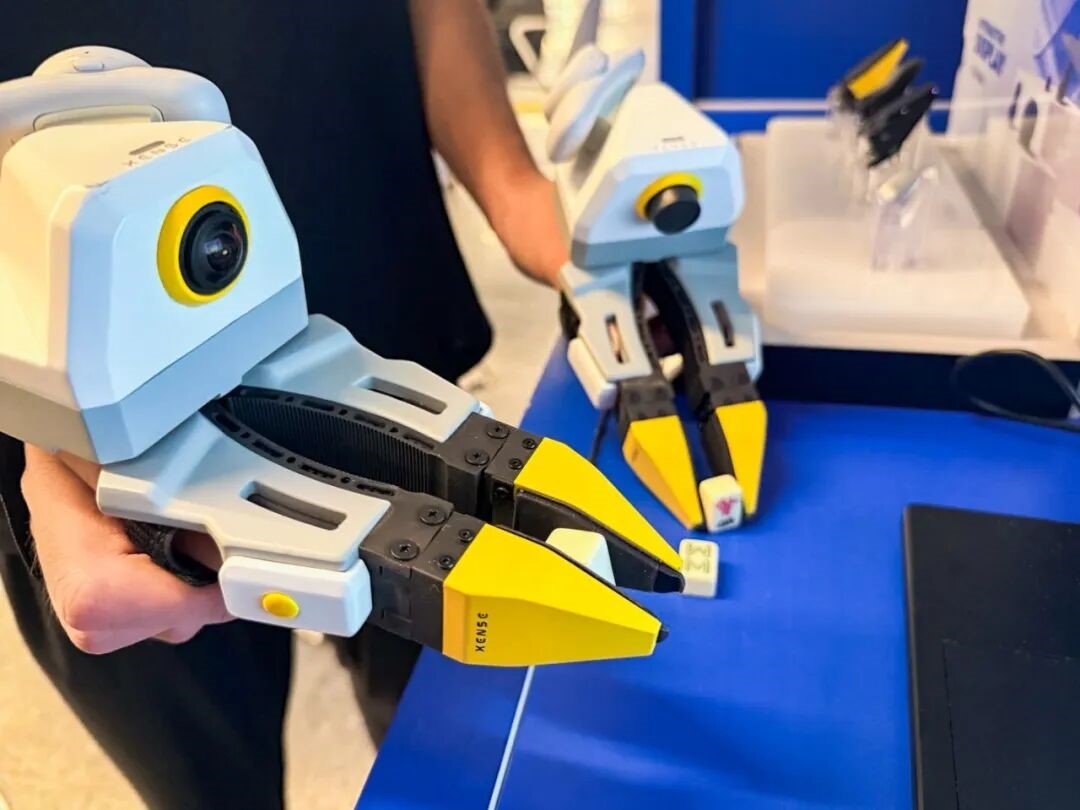
Visitors wear the XTac UMI G1 to manipulate everyday objects and view visual, tactile, pose, and operational data on a screen in real time. Compared with collecting data directly on a robot, the XTac UMI G1 captures real interaction data at lower cost while retaining key information about vision, touch, pose, and operation. For robotics teams that need a continuous supply of real manipulation data, this approach lowers the barriers posed by equipment and environments and makes data collection easier to scale.
At the Pujiang Innovation Forum, Xense presented tactile sensing, data collection, and multimodal information in a single setting. With a strong focus on putting innovation into practice, the company advances its technology through engineering capability and data quality, so that its products can be tested in real settings. Together, these products form links in a tactile technology loop: from tactile hardware to real interaction data, model training, and applications. They make touch a foundational capability for robots to understand and manipulate the physical world, supported by a complete full-stack technology system.
