

内容摘要
From seeing the world to manipulating the world, exploring the frontiers of visuo-tactile fusion technology with globa…
From seeing the world to manipulating the world, exploring the frontiers of visuo-tactile fusion technology with global top experts, advancing embodied intelligence from the laboratory to the real world.
Xense co-founder and CTO Zhao Haonan shared the latest progress in full-stack tactile technology on site; founder Ma Daolin joined a Panel roundtable discussion and presented the award to the winner of Best Paper for Tactile Representation at the closing session, exploring the future direction of visuo-tactile intelligence together with global academic and industry guests.
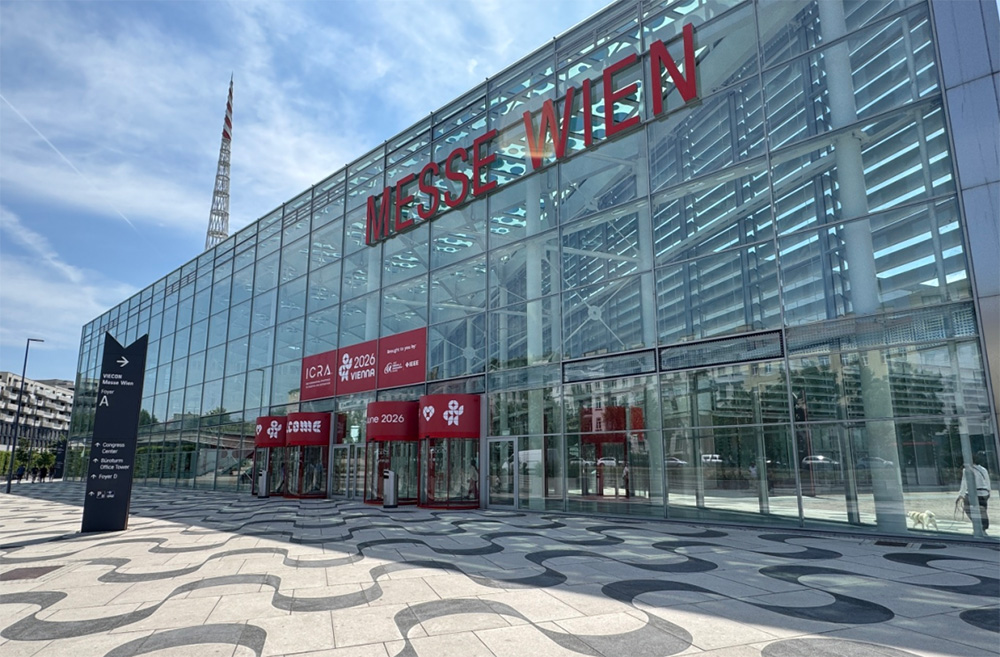
Recently, the world's leading conference in robotics and automation, the 2026 IEEE International Conference on Robotics and Automation (ICRA 2026), was held in Vienna, Austria. In parallel, the 7th ViTac Workshop (Vision and Touch workshop) was successfully convened, with Xense Robotics invited to participate and generously supporting the event as its highest-level sponsor, exploring visuo-tactile technology frontiers with global top experts and advancing embodied intelligence from the laboratory to the real world.
Touch Is Becoming an Important Frontier of Embodied Intelligence
This ICRA 2026 Workshop was themed "Learning to See and Feel: Vision-Tactile Synergy for Embodied AI," focusing on the use of vision and touch in robot manipulation. As robots move into real, unstructured environments, touch is becoming a critical capability for understanding physical information such as contact, force feedback, slip, deformation and material properties.
In recent years, the development of new tactile hardware, high-fidelity simulation, and vision-tactile-language-action models is advancing robot tactile intelligence from single-point perception toward systematic capability. Around key topics including tactile hardware, tactile data collection, simulation, foundation models and contact-rich manipulation, the workshop provided a frontier exchange platform for academia and industry.
From Hardware Perception to Data Closed Loop, Building a Physical Intelligence "Tactile Foundation"
At this conference, Xense Robotics co-founder and CTO Zhao Haonan delivered a keynote on tactile perception and physical intelligence, clearly articulating a key industry judgment: for robots to truly land in the real world, they must establish a tactile-driven physical intelligence system.
Based on this judgment, Xense Robotics systematically presented the company's core achievements and technology layout in high-precision tactile sensing, tactile simulation, tactile algorithms and related fields. Centered on the core concept of "Igniting Physical Intelligence with Touch," it detailed core technologies including self-developed multimodal tactile sensors, the Isaac Sim tactile simulation platform, and the TouchGuide tactile guidance strategy, as well as application explorations in scenarios such as industrial precision assembly, flexible grasping and human-robot interaction. These explorations jointly advance touch from single-point sensor capability to the underlying general capability for robots to understand contact, execute fine manipulation and adapt to complex environments.
As one of the world's earliest hardcore technology companies to propose the tactile spatial intelligence theory, Xense Robotics has always focused on building a robot tactile intelligence system. The company's self-developed multimodal tactile sensors can precisely capture high-density contact images, deformation signals and real-time force data, achieving multidimensional perception including motion, slip and force, adapting to irregular curved surfaces and flexible materials, providing "tactile nerve" support for fine robot manipulation. Related technologies won the only Best Conference Paper Award at ICRA 2021.
On the technology innovation front, leveraging the Isaac Sim tactile simulation platform, Xense generates multimodal interaction data at low cost; innovating tactile calibration, compliant perception and the TouchGuide guidance strategy significantly improves robot reliability in complex tasks such as threading, assembly and flexible grasping, as well as the "last mile" of fine manipulation.
To date, Xense has built a physical intelligence full-stack closed-loop ecosystem deeply integrating tactile hardware R&D, high-precision tactile data collection, self-developed perception algorithm iteration, tactile world model construction and VTLA model scenario application, to achieve self-evolution and sustained leadership of the physical intelligence system.
Future Outlook: Let Robots Understand and Manipulate the World Through Contact
For embodied intelligence, the key challenges of real-world manipulation often lie after contact. Whether an object slips, whether a surface is soft, whether contact is stable, whether force is appropriate — these pieces of information are difficult to judge by vision alone, yet directly determine robot performance in tasks such as grasping, assembly, handover, alignment and rolling contact.
Xense firmly believes that touch is the key entry point to physical intelligence. Only when robots can simultaneously see and feel the world can they correct actions in real time in complex physical interactions, moving from "executing actions" to "understanding interactions."
In the future, Xense Robotics will continue to work toward the goal of "making touch scalable, learnable and deployable," focusing on four major directions: tactile perception upgrade, dataset construction, simulation optimization and model fusion, joining hands with global research institutions and industry partners to jointly advance the technological innovation and large-scale implementation of tactile intelligence, making touch the general core capability of next-generation embodied intelligence.
